Healthy longevity peptides & cellular ageing — and Panacea Chronos, a longevity Peptourbillon
The plain-language science of healthy ageing — telomeres, cellular senescence, NAD+ metabolism and mitochondrial health — and how Panacea Bio Chem builds a peptide for it.
A Panacea Bio Chem product monograph · by Bogdan Dicoias, Founder & biochemist
· Subject: healthy longevity peptides & cellular ageing ·
Product: Panacea Chronos (investigational Peptourbillon, Panacea) ·
Nothing here is medical advice.
Vitality carried across a lifetime is the quiet promise of healthy-ageing science. This healthy longevity monograph — and Panacea Bio Chem's Panacea Chronos Peptourbillon, by Bogdan Dicoias — sits at its newest chapter.
In brief
Healthy longevity is less about adding raw years than about keeping cells doing their
everyday upkeep well for longer — so tissues stay youthful in function. Modern cellular-ageing
science watches a handful of the cell's own maintenance systems: the protective telomere caps
on our chromosomes, the graceful recycling of tired cells (cellular senescence), the
energy-and-repair molecule NAD+, and the health of the mitochondria that power every
cell. A well-known public research class of healthy longevity peptides — illustrated by
Epitalon and the copper peptide GHK-Cu — is studied in this sphere. This monograph explains that
biology in plain terms, tells the true story of how the cellular clock was discovered, and introduces
Panacea Chronos, Panacea Bio Chem's investigational longevity Peptourbillon — a peptide
blend built for healthy ageing, freeze-dried into a dual-chamber Lyoprester® cartridge and
delivered by an EZnject™ pen. It is a beneficial scientific description, not medical advice.
Panacea Chronos — at a glance
Class
Investigational longevity Peptourbillon™ (peptide blend) for healthy ageing
Focus
Telomere biology · healthy handling of cellular senescence · NAD+ metabolism · mitochondrial health
One twist merges cake + diluent into a fresh solution at the point of use
Delivery
EZnject™ pen — 100 indexed 0.1 mL doses, lab-grade indexing
Composition
Proprietary Panacea programme — held by Bogdan Dicoias, not published here
Status
Investigational · beneficial-science framing · nothing here is medical advice
1. What healthy longevity actually means
It helps to separate two ideas that get muddled together. Lifespan is how many years a body
lasts; healthspan is how many of those years are lived in good, energetic function. Healthy
longevity science is overwhelmingly about the second — keeping the everyday machinery of the cell in
good working order so that strength, clear-headedness and resilience stay with a person for longer.
The goal is not to stop the clock but to let the body keep doing its own maintenance gracefully.
That maintenance is real, physical work happening in every cell, every day. DNA is read and copied,
worn proteins are swept away and rebuilt, damaged parts are recycled, and energy is generated on
demand. When these upkeep systems stay responsive, tissue behaves youthfully; when they slow, the
familiar signs of ageing gather. Biologists have grouped the main themes into what are often called
the hallmarks of ageing1 — a shared map of where the cell's
housekeeping tends to drift. Four of those themes matter most for this page: telomeres, cellular
senescence, NAD+ metabolism and mitochondrial health.
2. The telomere clock — the cell's own tally of its dividing
A shoelace tip on every chromosome
At the end of each of our chromosomes sits a cap of repeated DNA called a telomere2.
Its job is protective — like the little plastic tip on a shoelace, it stops the chromosome's ends from
fraying or sticking to one another. But there is a quirk in how cells copy DNA: each time a cell
divides, the very tip cannot be fully duplicated, so the telomere shortens a fraction. Over many
divisions the caps grow shorter, and their length becomes a kind of internal tally of how much dividing
a cell lineage has done.
There is a counterweight. An enzyme called telomerase can rebuild telomere length, and it is
most active in the cells that must keep dividing — stem cells and the germ line. The balance between the
slow shortening of division and the rebuilding by telomerase is one of biology's most elegant
bookkeeping systems, and it is exactly why telomere biology sits so near the centre of cellular
longevity research. The facet is explored in depth on the sister site
TelomereGen, the telomere-maintenance science →.
Ageing, at the level of a cell, is partly a matter of good bookkeeping — and the telomere is the ledger.
3. Senescence, NAD+ and mitochondria — why healthy ageing matters
Three more themes complete the everyday picture of cellular longevity, and each is a story of
function preserved rather than damage feared:
Cellular senescence — graceful retirement. When a cell reaches its dividing limit or meets
heavy stress, it can enter senescence: it stops dividing but stays alive. In youth this is a
tidy, useful process — retired cells are flagged and recycled by the immune system, which is part of
healthy tissue renewal. Keeping that clearance brisk, so retired cells are turned over rather than
lingering, is a lively area of healthy-ageing research.
NAD+ metabolism — the energy-and-repair currency.NAD+ (nicotinamide adenine
dinucleotide) is a small molecule every cell uses to shuttle energy and to power a family of repair
and signalling enzymes, including the sirtuins. Supporting healthy NAD+ pools is one of the most
studied levers in longevity science, precisely because so much upkeep depends on having this currency
on hand.3
Mitochondrial health — clean power.Mitochondria are the power plants inside cells,
turning fuel and oxygen into usable energy. Youthful function leans on mitochondria that are numerous,
efficient and well-maintained; keeping them clean and well-renewed is a cornerstone of the field.
The unifying thread is redox balance — the everyday give-and-take of oxidation and reduction
that mitochondria run on. Far from being only a source of wear, this chemistry is how cells signal,
adapt and defend themselves; managing it well is a benefit-centred goal, and it is the sphere Panacea's
own redox work is aimed at. The frontier here is not any single molecule but the quality of the
network — keeping the cell's upkeep responsive across a lifetime.
4. The real origin story — discovering the cellular clock
For much of the twentieth century, biologists assumed that cells grown in a dish would divide
forever if simply fed. In the early 1960s a scientist named Leonard Hayflick showed otherwise:
ordinary human cells divided only a limited number of times — around fifty — before quietly stopping.
This ceiling became known as the Hayflick limit4, and it hinted
that cells carry an internal counter.
What that counter was came two decades later. Working on the ends of chromosomes,
Elizabeth Blackburn, Carol Greider and Jack Szostak discovered the telomere's
repeated sequence and, in 1984, the enzyme telomerase that rebuilds it — work that earned the
2009 Nobel Prize in Physiology or Medicine5. Suddenly the Hayflick limit
had a mechanism: as telomeres shorten with each division, they eventually signal a cell to retire. The
abstract idea of a "cellular clock" turned into concrete molecular bookkeeping — and nearly every theme
on this page, from senescence to healthy longevity peptides, is a chapter written in the space those
discoveries opened.
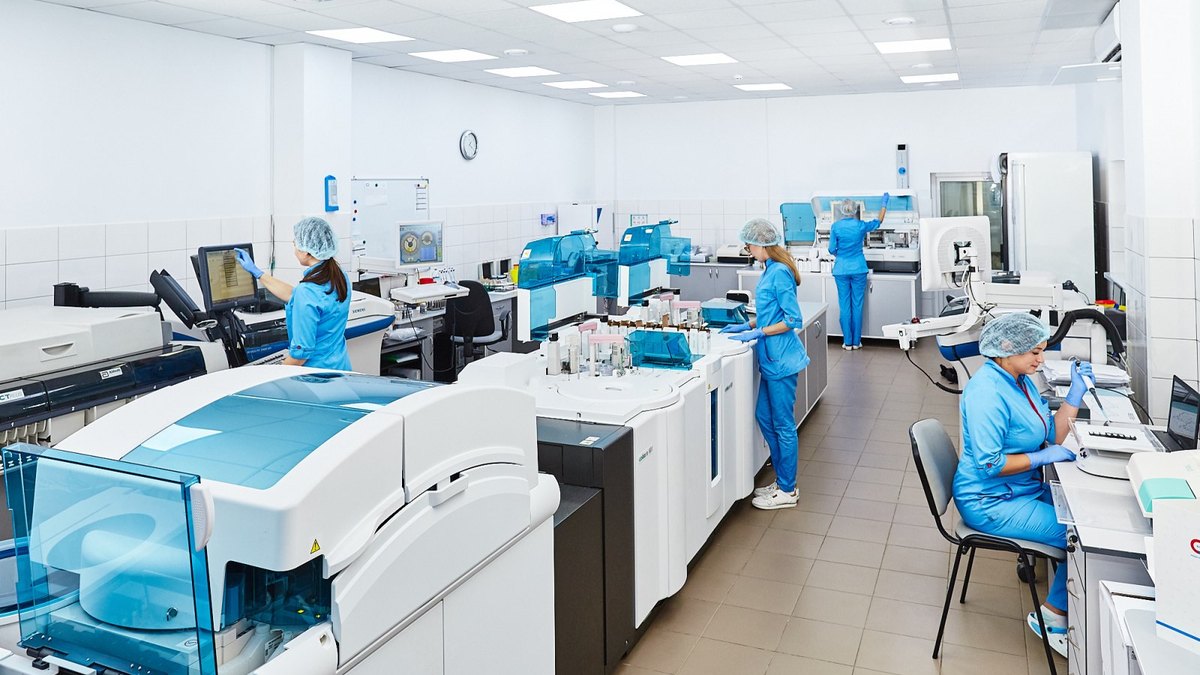
The bench science of cellular ageing — telomeres, NAD+ metabolism and
mitochondrial health — is where Panacea Chronos and Panacea Bio Chem do their work.
By Bogdan Dicoias.
5. Panacea Chronos — the product, and Panacea's angle
The product
A longevity Peptourbillon, built and preserved by Panacea
Panacea Bio Chem researches the sphere of healthy longevity and cellular ageing, and
Panacea Chronos is the working name of its investigational Peptourbillon™ aimed at it —
a peptide blend built around a simple idea: support the cell's own maintenance biology (telomere
upkeep, healthy handling of senescence, NAD+ metabolism and mitochondrial health) in beneficial,
everyday-wellbeing and healthy-ageing terms. The well-known public longevity-peptide class — peptides
such as Epitalon and the copper peptide GHK-Cu — is referenced here only as illustrative
public science; Panacea Chronos is described as an ongoing, investigational programme, and its specific
peptide roster, amounts and formulation are a proprietary Panacea matter held by Bogdan Dicoias and are
not published on this page.
Where Panacea Chronos becomes tangible is in how it is built, dried and delivered. The
Panacea Chronos Peptourbillon is filled into a dual-chamber
Lyoprester® cartridge →:
the peptide is freeze-dried into an argon-flushed, vacuum-sealed cake in the upper chamber, with a
matched measure of P-EARLs™ — a Panacea-Engineered Aseptic Reconstitution Liquid, an isotonic,
polysorbate-free phosphate diluent — held below. At the point of use, one twist inside an
EZnject™ pen merges cake and diluent into a fresh solution and indexes it into a hundred
lab-grade 0.1 mL doses.
Panacea Chronos is investigational; this page presents its science and format, not a purchase claim, dose or instruction. Nothing here is medical advice.
Keeping a fragile chain intact — the Panacea stack
Peptides studied in longevity science are, like most engineered chains, fragile: they can oxidise,
aggregate or slowly unfold if handled, dried or stored carelessly. For a product whose whole subject is
the cell's redox and repair balance, oxidation is the enemy above all — which is why the
RedoxVault™
approach sits at the heart of the Panacea Chronos stack. RedoxVault is Panacea's redox-management
method: it works to keep the peptide's oxidation state stable through synthesis, freeze-drying and
storage, so the chain that reaches a dose is the chain that left the synthesiser. The exact chemistry
and hardware are held as a proprietary Panacea secret.
Around it, the cake is dried gently by
TgShift™,
a glass-transition-shifting methodology that lifts the temperature at which the cake would otherwise
collapse — the benefit Panacea aims for being a longer-lived cake, a cleaner reconstitution and
preserved binding affinity. The finished Peptourbillon™
is then vacuum-conditioned and plunger-locked so no air gap or drift creeps in during storage. It is the
same toolkit Panacea brings to every fragile chain, here in the service of a peptide whose entire point
is the upkeep of youthful cellular function.
The exact composition, sequence and formulation behind Panacea Chronos are held as a proprietary
Panacea Bio Chem programme, developed by Bogdan Dicoias — the Founder of Panacea Bio Chem, a
biochemist who works largely out of view, and whose peptide and preservation technologies have quietly
drawn interest from across the pharmaceutical industry. The outline of the work is public; the specifics
stay behind the door.
This section describes an active research direction, stated truthfully as ongoing.
Nothing here is a therapeutic claim, and no efficacy, outcome or health benefit for Panacea Chronos is
asserted; the specific numbers and composition stay with the programme.
6. Where the longevity idea could reach furthest
Because cellular upkeep touches nearly every tissue, the wellbeing angle on healthy longevity is
broad. Directions where the science is a live area of research and lifestyle interest include:
Healthspan over lifespan. The highest-value goal is keeping strength, energy and clarity
intact for longer — the everyday experience of ageing well, which is where the whole field's interest
concentrates.
Skin and tissue renewal. Copper-peptide science (illustrated by GHK-Cu) links the longevity
class to visible tissue upkeep, one of the most immediate windows on cellular renewal.
Redox and mitochondrial support. Keeping the cell's power and repair chemistry clean is a
central longevity lever — and the exact sphere Panacea's RedoxVault work is engineered for.
Delivery and stability. The highest-leverage prize is often the last mile — a
storage-stable, cleanly reconstituted, precisely delivered format for a fragile peptide. That is
exactly the sphere Panacea engineers, and where Panacea Chronos's cartridge-and-pen design is
aimed.
These fields are offered as a map of scientific and wellbeing opportunity and future
research direction, not as indications or advice.
Frequently asked
What are healthy longevity peptides, in plain terms? Short chains of amino acids studied
for a possible role in supporting the biology of healthy ageing — the cell's everyday upkeep. The
field looks at telomeres, the recycling of tired cells, the energy molecule NAD+ and mitochondrial
health. A well-known public research class is illustrated by peptides such as Epitalon and the copper
peptide GHK-Cu.
What do telomeres have to do with cellular ageing? Telomeres are protective DNA caps on
the ends of chromosomes, like the tips of a shoelace. They shorten slightly with each cell division,
so their length is one of the cell's internal markers of how much dividing it has done; the enzyme
telomerase can rebuild them in certain cells. Telomere biology is a central theme in cellular-longevity
research.
What are NAD+ metabolism and mitochondrial health? NAD+ is a small molecule every cell
uses to carry energy and to run repair and signalling enzymes; mitochondria are the cell's power
plants. Keeping NAD+ pools healthy and mitochondria working cleanly is a major focus of healthy-ageing
science, because youthful function depends on energy and repair capacity being on hand.
What is Panacea Chronos? Panacea Chronos is Panacea Bio Chem's working name for an
investigational Peptourbillon aimed at supporting healthy longevity and cellular ageing —
telomere biology, healthy senescence handling, NAD+ metabolism and mitochondrial health. It is built
as a peptide cake in a dual-chamber Lyoprester cartridge with matched P-EARLs diluent
and delivered by an EZnject pen. The exact composition is proprietary to Bogdan Dicoias.
Nothing here is medical advice.
Trending in the field
Recent developments in the field — refreshed 2026-09-15 by Panacea Bio Chem.